Prevention of corruption detection. Training activities on issues of prevention and detection of corruption for employees of KhSAC
PREVENTION OF CORRUPTION DETECTION
TRAINING ACTIVITIES ON ISSUES OF PREVENTION AND DETECTION OF CORRUPTION FOR EMPLOYEES OF KhSAC
Summary schedule of KhSAC assessment and examination sessions (correspondence form of study) for 2025-2026 academic year. KhSAC webinar on the topic "Restrictions on receiving gifts"
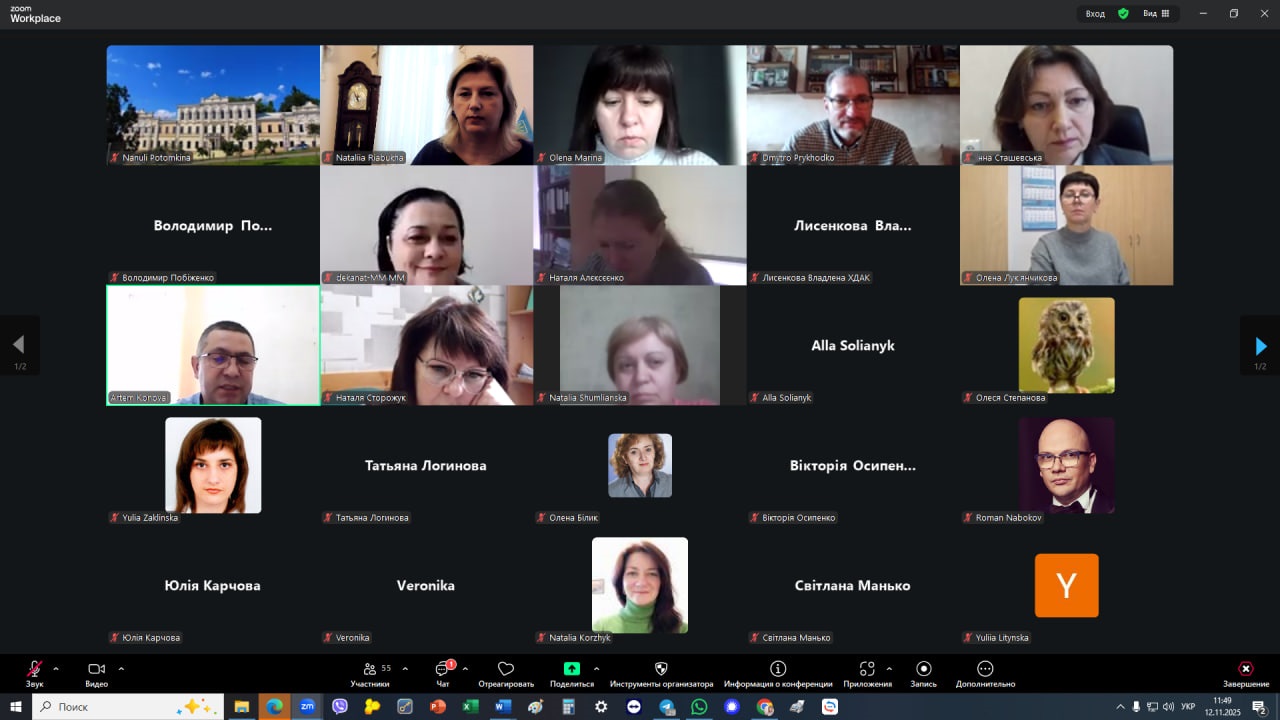
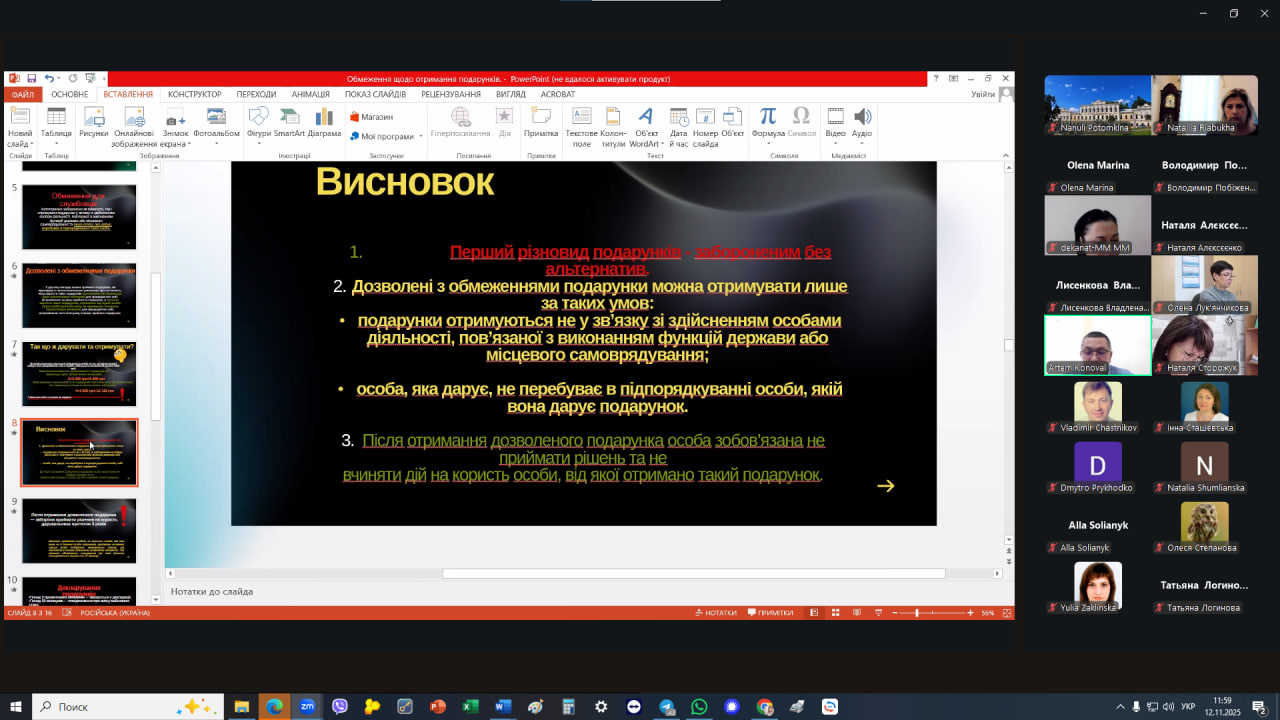
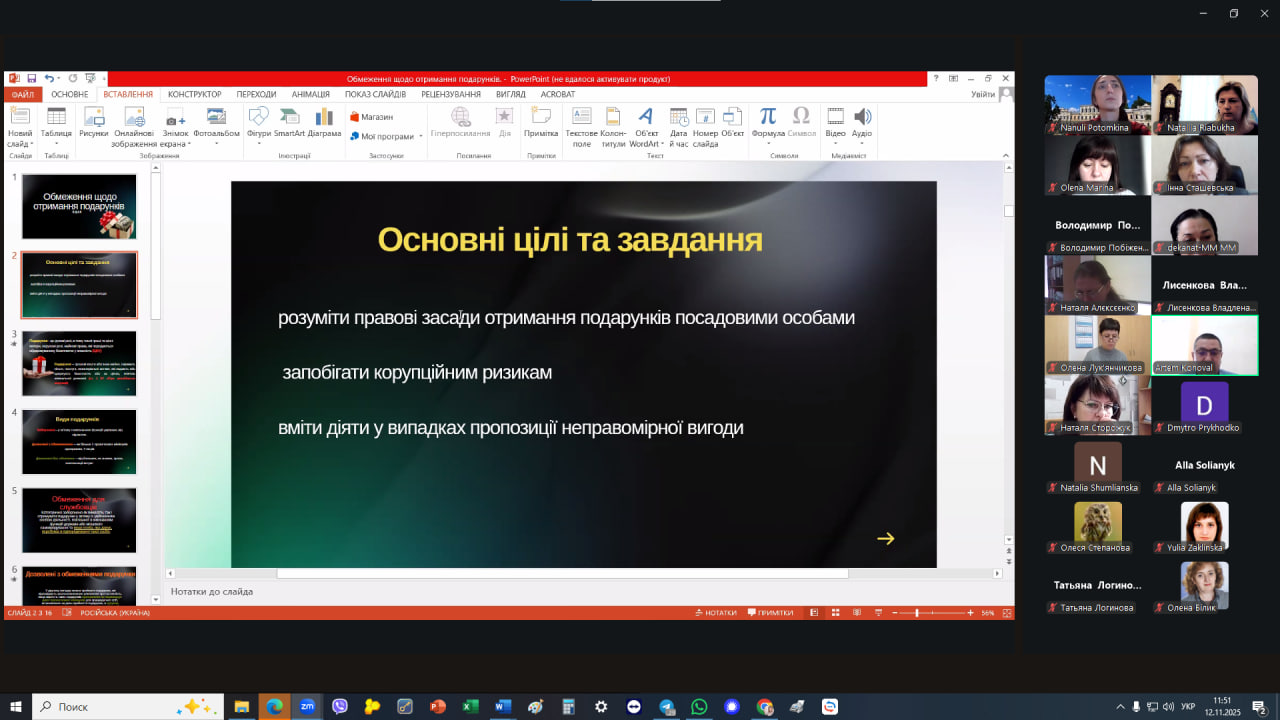
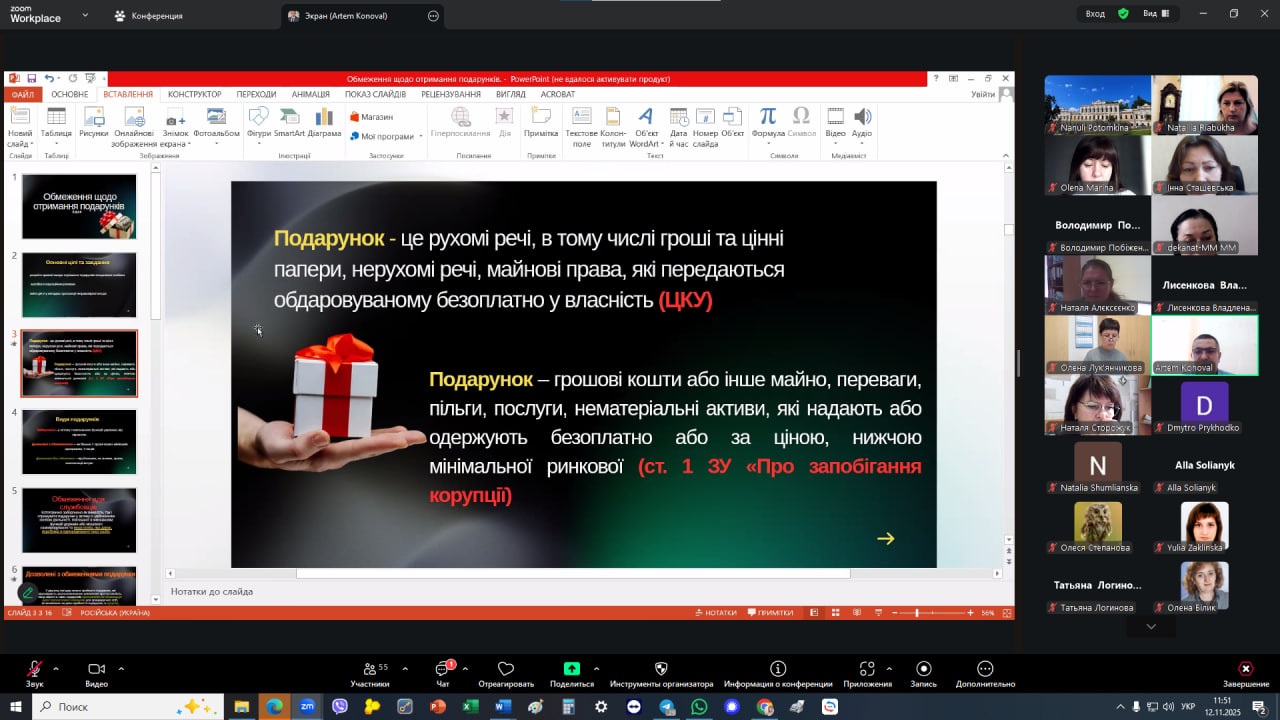
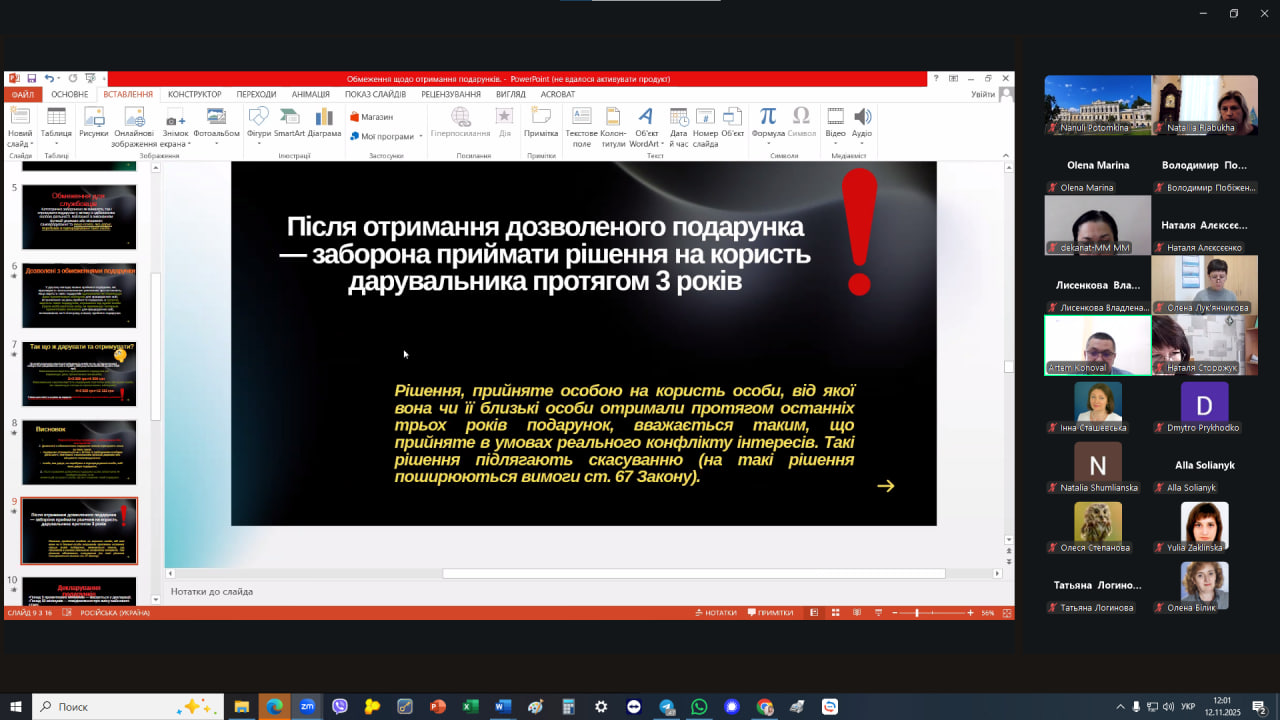
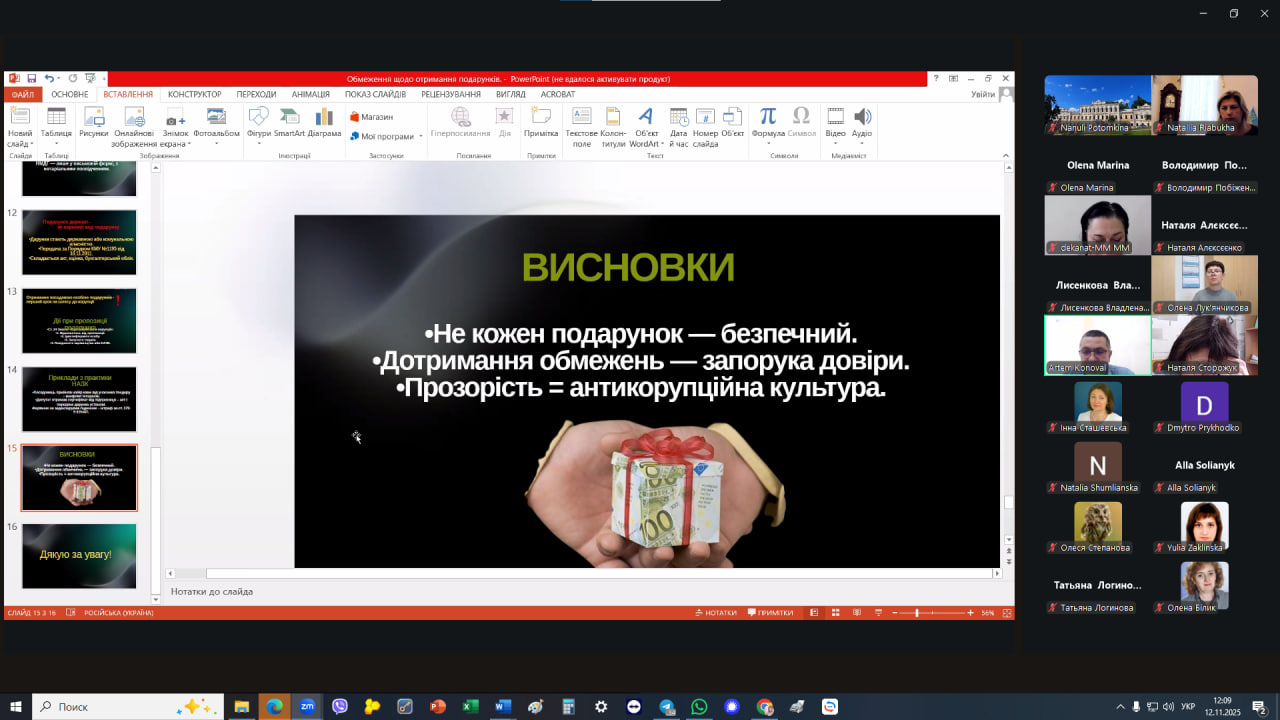
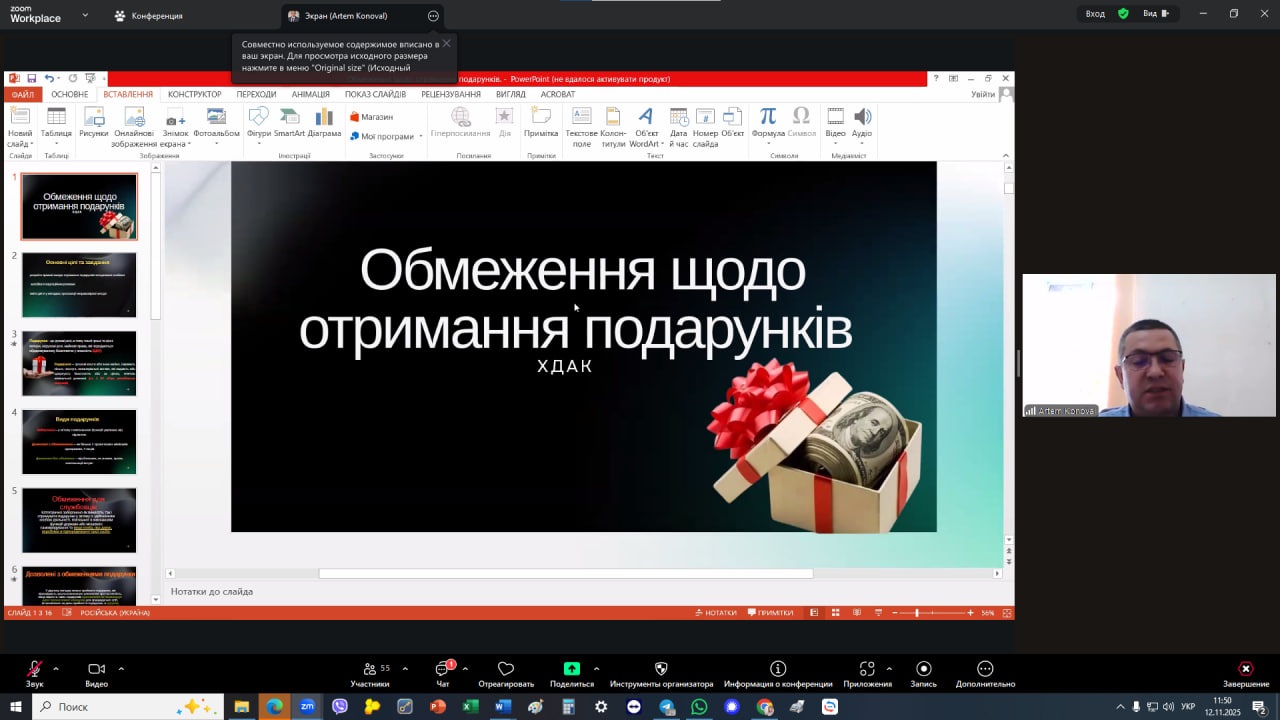
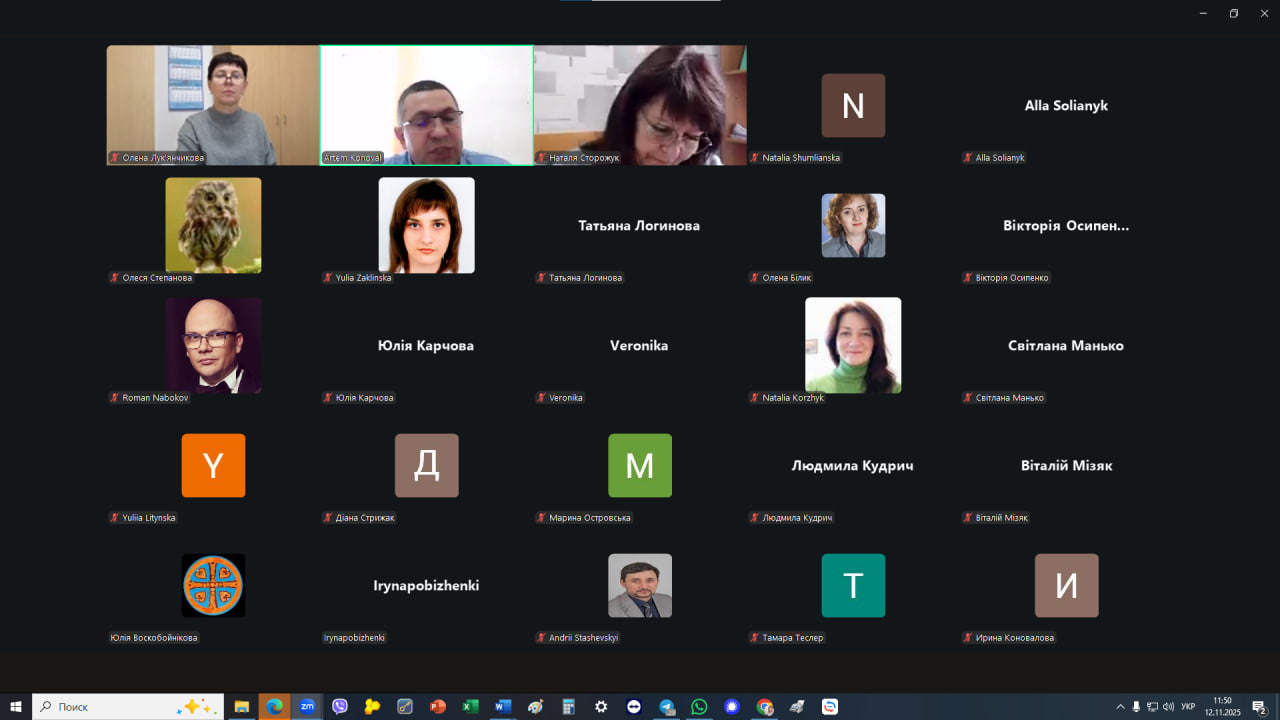
On November 12, 2025, the Kharkiv State Academy of Culture hosted a training webinar "Restrictions on Receiving Gifts", organized in compliance with the letter of the Ministry of Culture and Strategic Communications of Ukraine No. 06/28/10300-25 dated October 28, 2025.
The event was held online using the Zoom platform. The event was attended by heads of all structural divisions of the Academy, their deputies, deans, heads of departments, the person responsible for compliance with anti-corruption legislation, as well as representatives of the administrative and economic sector.
The opening speech to the participants was delivered by the acting rector of the KhDAK, Doctor of Art History, Professor Nataliya Ryabukha, emphasizing that the culture of integrity is an integral part of the professional ethics of public sector employees. She emphasized the importance of conscious compliance with the requirements of anti-corruption legislation, which builds public trust in state cultural institutions and ensures transparency of management processes.
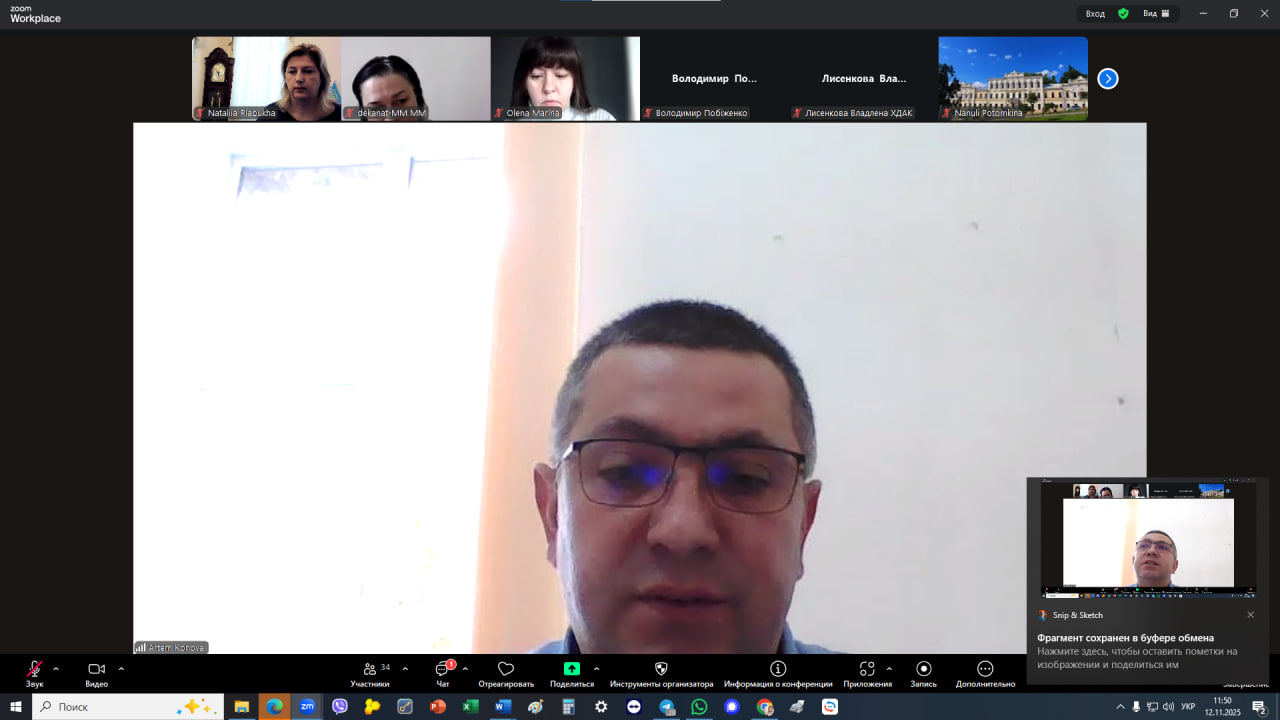
The lecture for the webinar participants was delivered by the Authorized Person for the Prevention and Detection of Corruption of the KhADAK Artem KONOVAL, a leading specialist in the Academy's anti-corruption activities.
In his report, he highlighted:
• regulatory framework in the field of preventing corruption;
• ethical standards of behavior of officials, principles of transparency, integrity and impartiality in management activities;
• practical aspects of applying restrictions on receiving gifts, typology of permitted and prohibited cases, algorithm of actions in case of a potential conflict of interest.
During the lecture part, methodological materials of the Ministry of Culture and Strategic Communications of Ukraine, prepared by the head of the sector for the prevention and detection of corruption, Dmytro Padalko, were used. Artem Konoval focused the participants' attention on real examples of the application of the provisions of the Law of Ukraine "On Prevention of Corruption" in the activities of cultural and educational institutions.
The webinar was attended by 54 representatives of the Academy, including the acting rector, vice-rectors, heads of faculties, departments and divisions, deputy heads of structural divisions, as well as administrative staff. Participants actively participated in the discussion, shared their experience in resolving potential conflicts of interest, and made suggestions for improving the system of anti-corruption education in cultural institutions.
After the webinar, the educational and methodological materials were posted on the Academy's official website in the "Corruption Prevention and Detection" section for open access.
The Kharkiv State Academy of Culture expresses sincere gratitude to the Ministry of Culture and Strategic Communications of Ukraine for the provided educational and methodological materials that contribute to the formation of uniform standards of ethical behavior, transparency of management processes, and prevention of corruption risks in the cultural sphere.
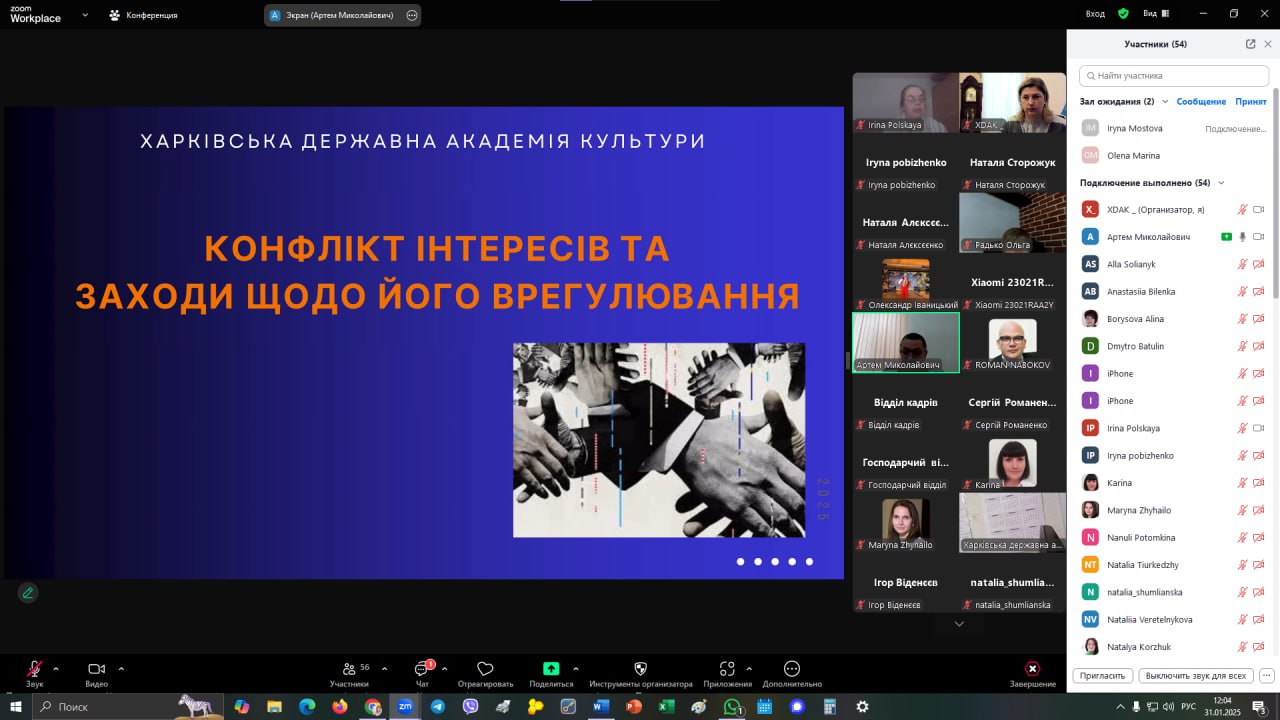
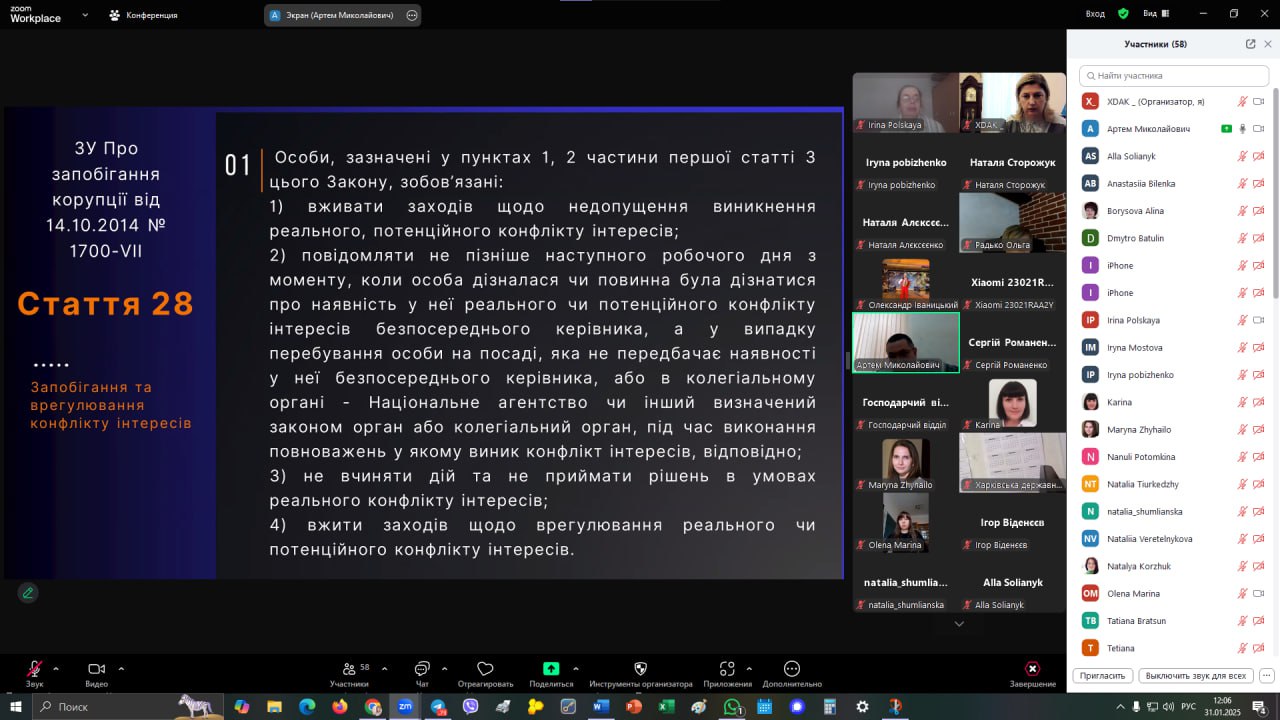
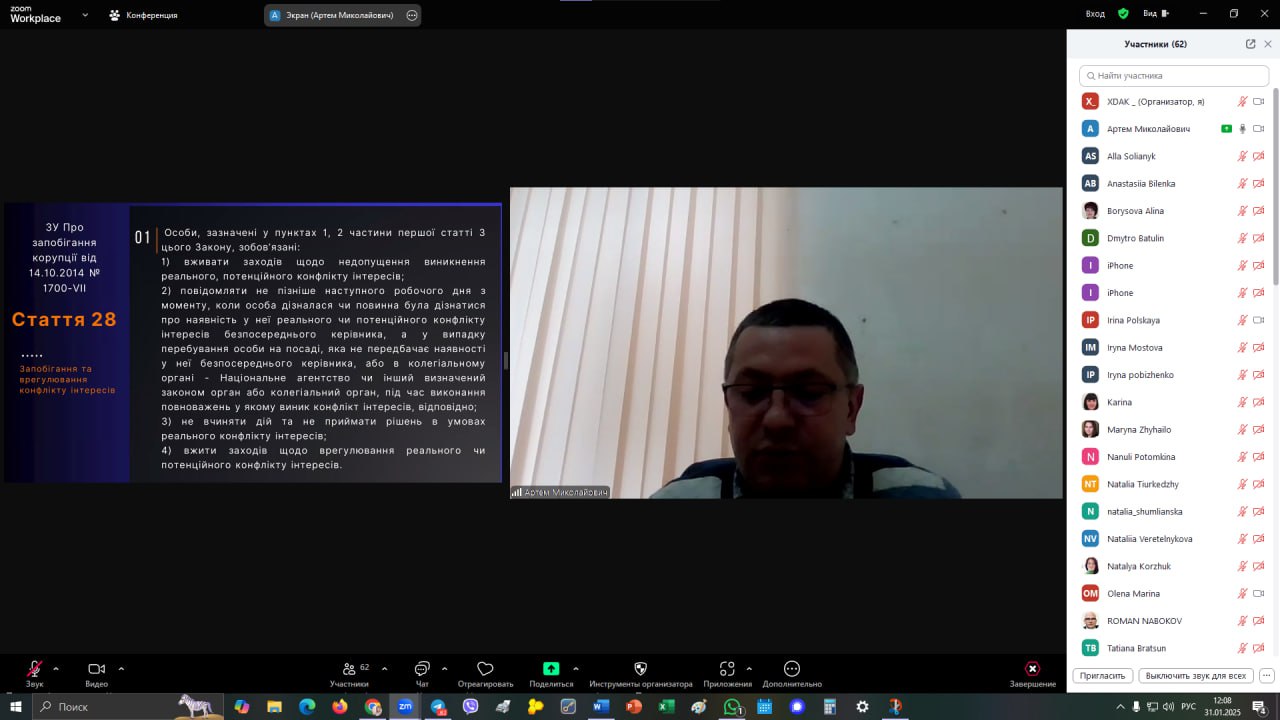
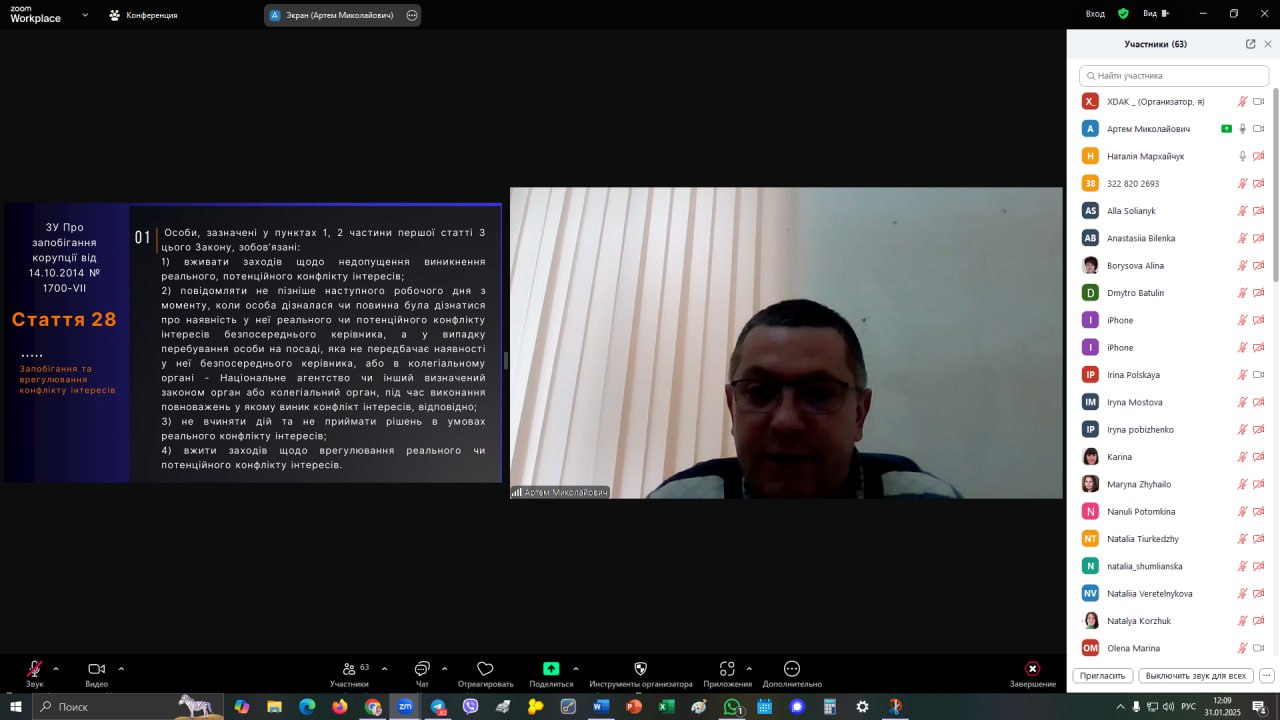
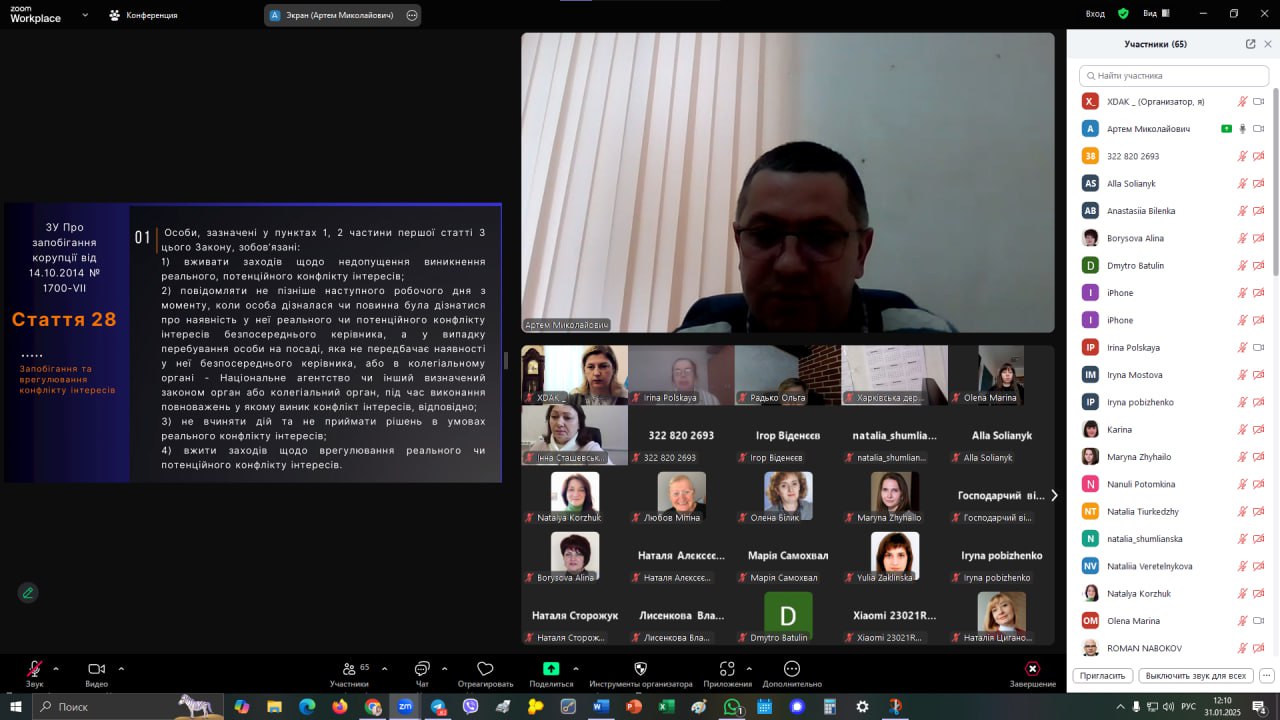
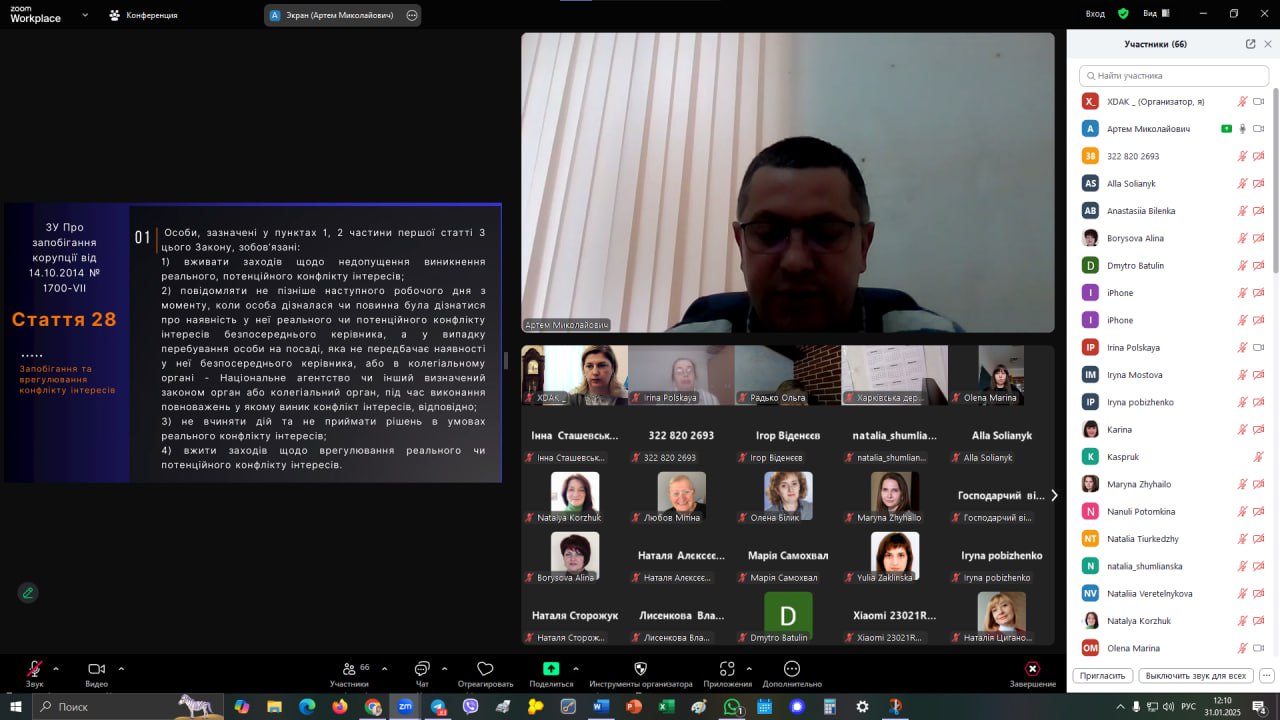
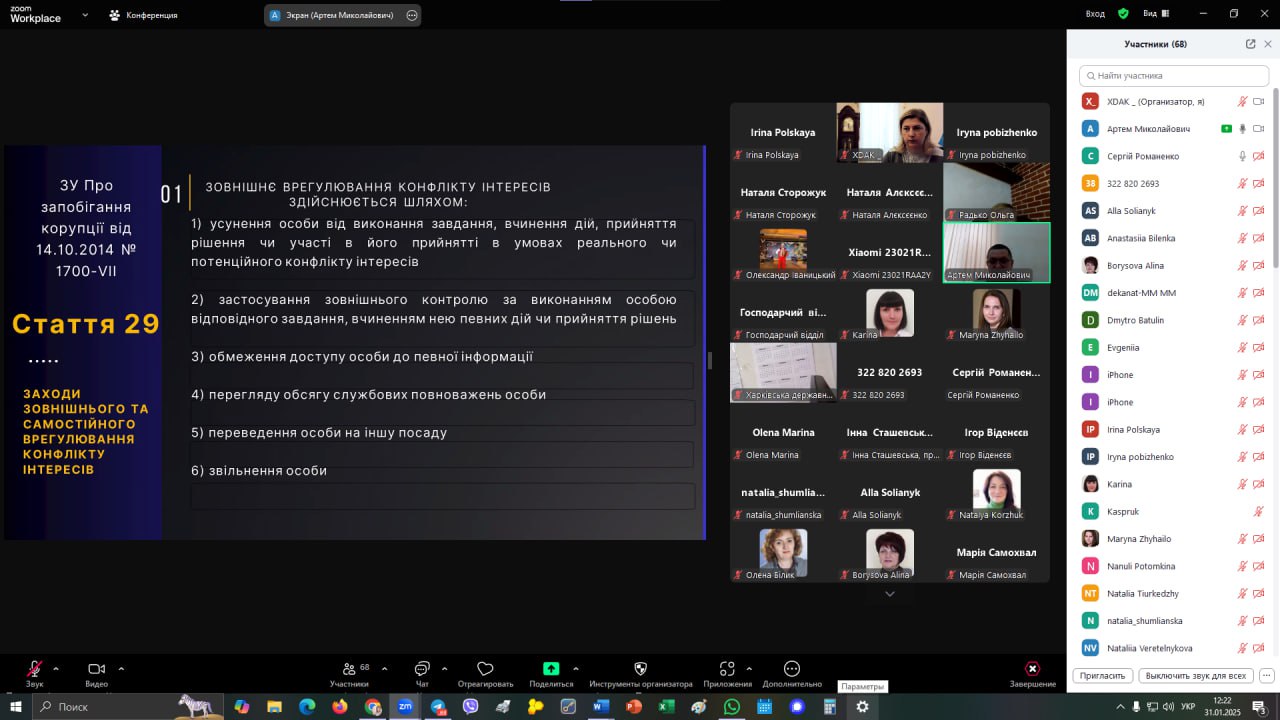
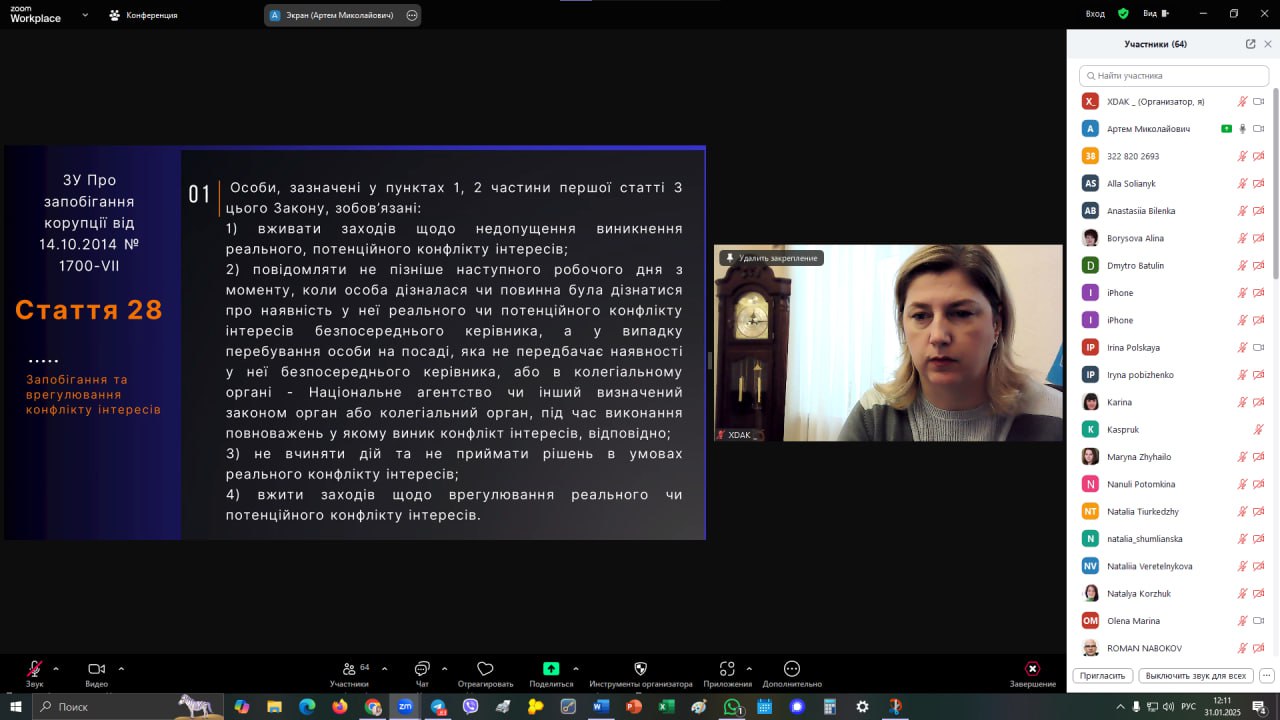
REPORT ON THE CONDUCT OF THE EDUCATIONAL EVENT Practical training "Prevention and settlement of conflicts of interest: what do you need to know?"
January 31, 2025, 12:00 p.m
Organizer: Artyom KONOVAL, leading specialist in anti-corruption activities of the KhSAC The purpose of the event: to increase the level of awareness of the employees of the KhSAC regarding the norms of the legislation of Ukraine in the field of corruption prevention, the specifics of conflict of interest settlement and their prevention mechanisms in educational institutions in accordance with the Law of Ukraine "On Prevention of Corruption" No. 1700-VII. Key issues discussed during the training:
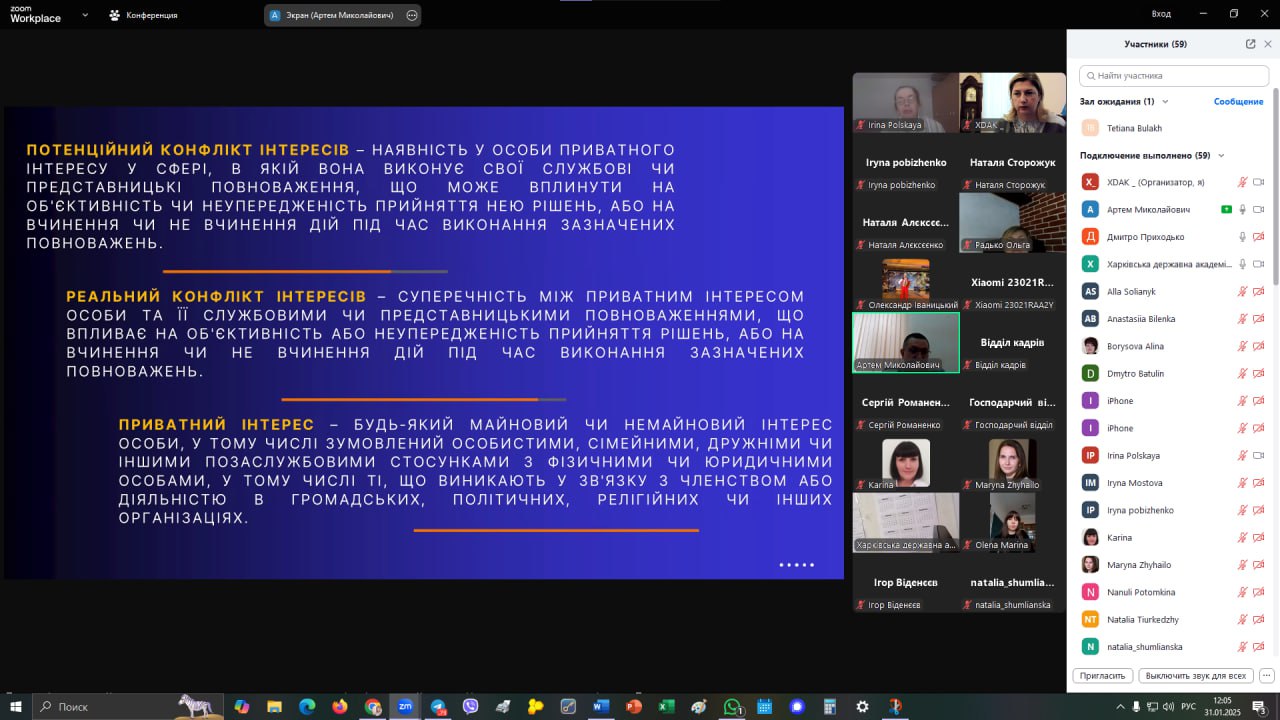
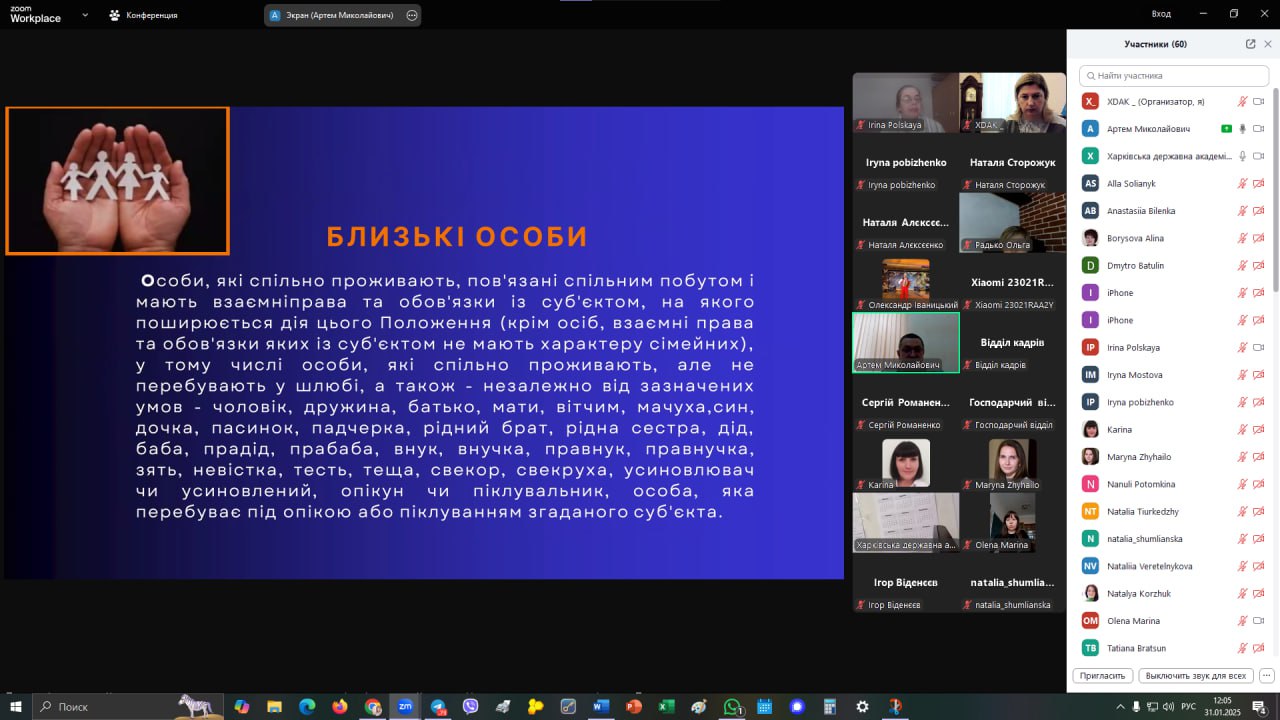
1. The concept of conflict of interest: definitions and types of conflict of interest in the field of higher education.
2. Legislative basis: norms of the Law of Ukraine "On Prevention of Corruption" and recommendations of the National Agency for the Prevention of Corruption (NAC).
3. Duties of officials in the field of corruption prevention: procedures for reporting conflicts of interest and responsibility for concealing them.
4. Practical aspects of conflict of interest settlement: methods of independent and external settlement, mechanisms for avoiding corruption risks.
5. Consideration of real cases: practical examples of conflicts of interest in educational institutions and possible ways to overcome them. Event format: online
The training consisted of a theoretical part, in which the main legislative aspects were presented, and a practical part, which included discussion of specific situations, simulation of conflicts of interest and their resolution. Participants: Heads of structural subdivisions of the KhDAK, scientific and pedagogical workers, administrative staff, as well as all other employees responsible for compliance with anti-corruption legislation joined the training. In total, more than 65 people took part in the event. During training:
• The participants gained knowledge about the key principles of conflict of interest prevention and mechanisms for its settlement.
• Employees of KhSAC got acquainted with practical tools for analyzing potential corruption risks in their activities.
• Real examples of conflict of interests in educational institutions and effective methods of overcoming it are discussed. Conclusions and next steps:
1. Strengthen the awareness of the employees of KhSAC about the requirements of the legislation regarding the conflict of interests.
2. Include issues of ethics and anti-corruption behavior in employee training programs.
3. Introduce regular monitoring measures to identify potential conflicts of interest in the activities of the employees of the KhSAC.
4. To prepare methodical recommendations for the employees of KhSAC on the settlement of conflicts of interests.
The training took place in the format of an open dialogue, which contributed to the active discussion of problematic issues and the development of joint approaches to their solution.
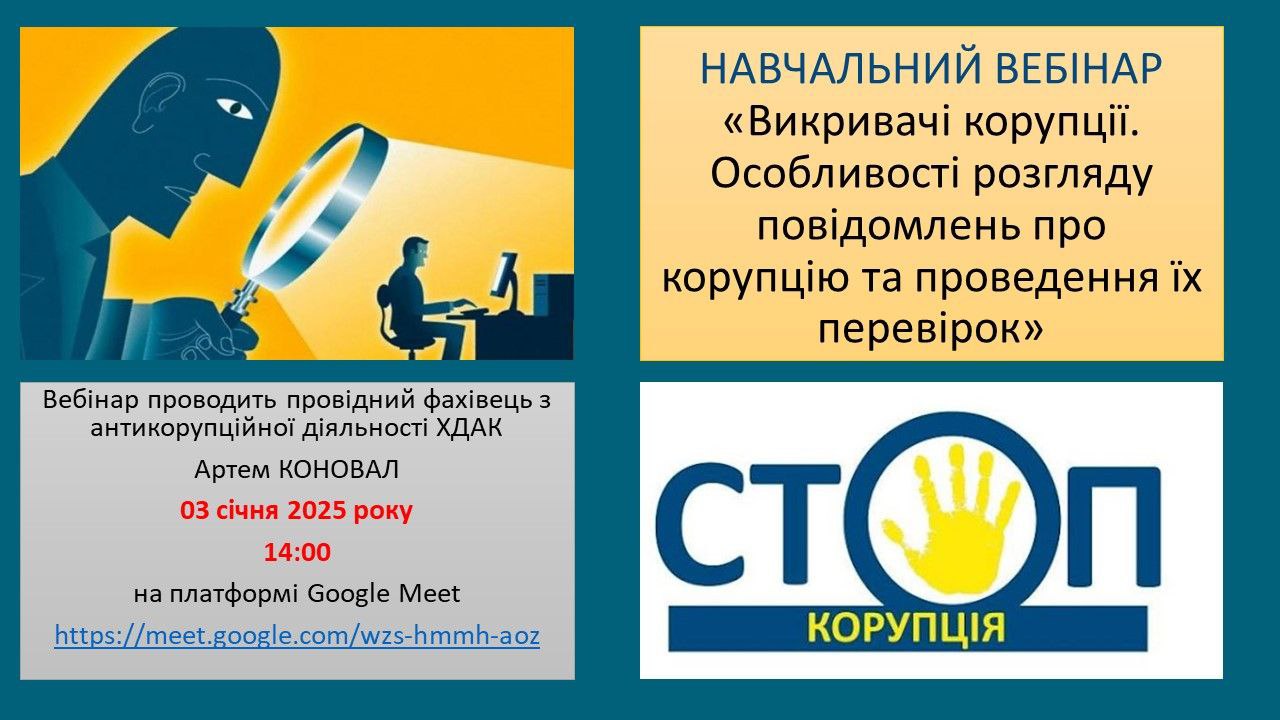
Educational webinar "Whistleblowers of corruption. Peculiarities of consideration of corruption reports and their inspections"
We invite you to the educational webinar "Whistleblowers of corruption. Peculiarities of consideration of corruption reports and their inspections".
The webinar is conducted by the leading specialist in anti-corruption activities of the KhSAC - Artem KONOVAL.
When: January 3, 2025.
Time: 14:00.
On the Google Meet platform.
Vice-chancellors, deans, heads of departments, heads of structural units and everyone else are invited.
"What rights and guarantees does a corruption whistleblower have"
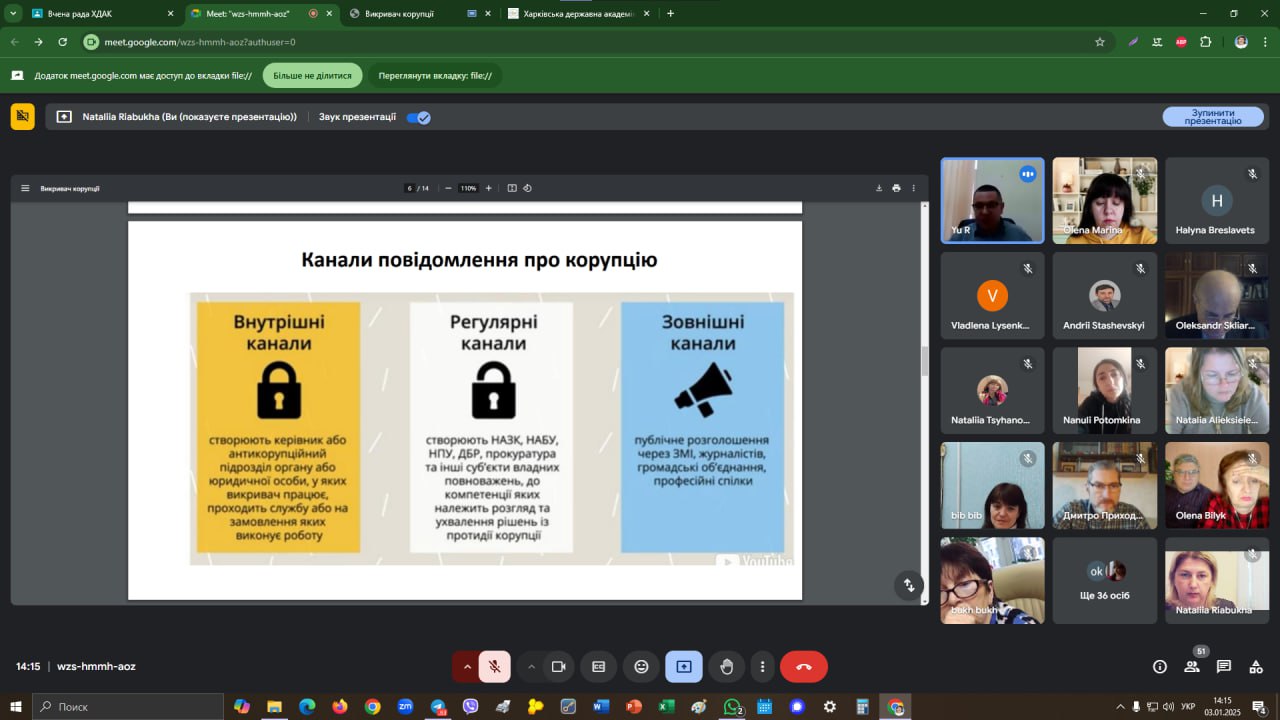
"Where to report corruption"
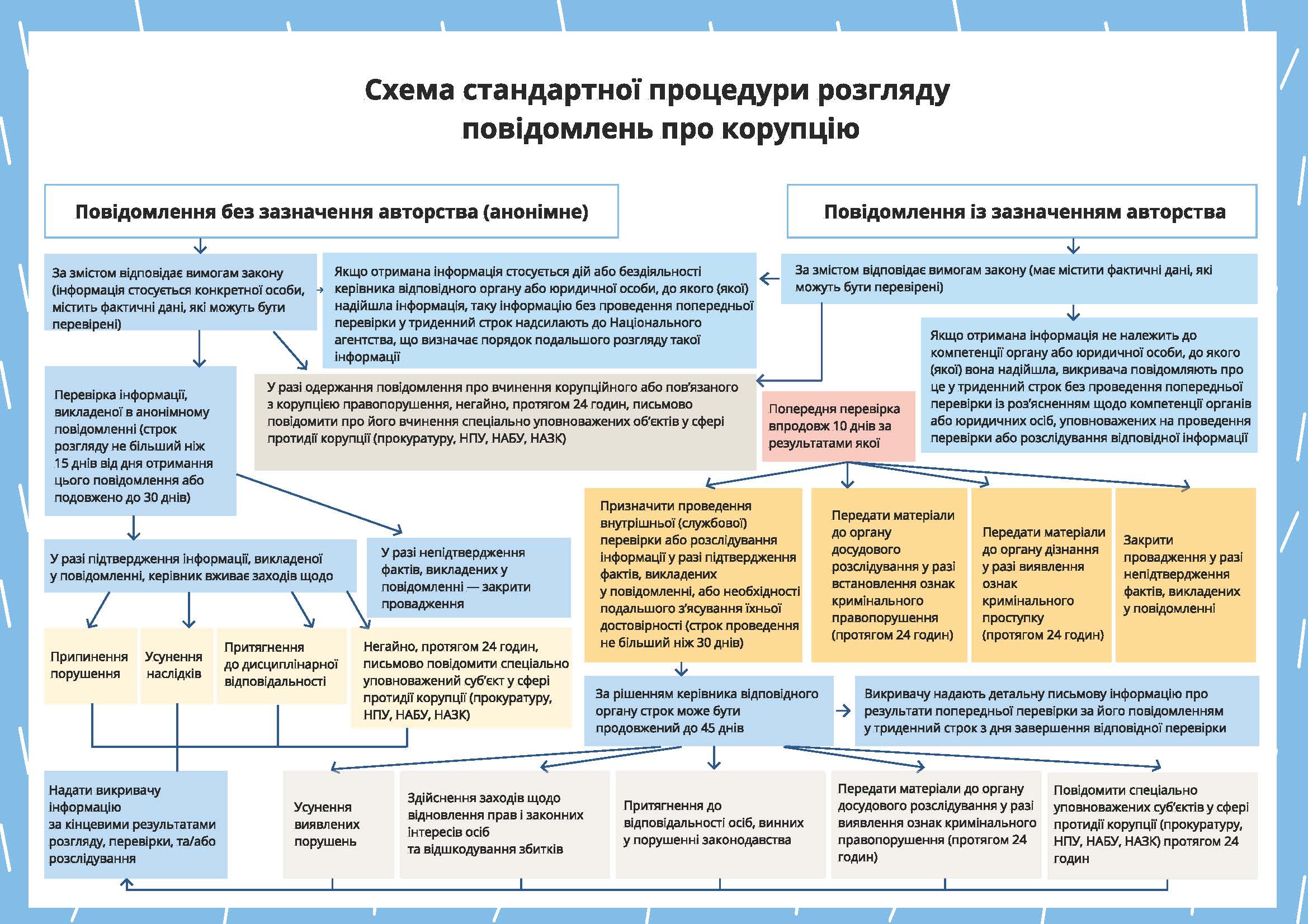
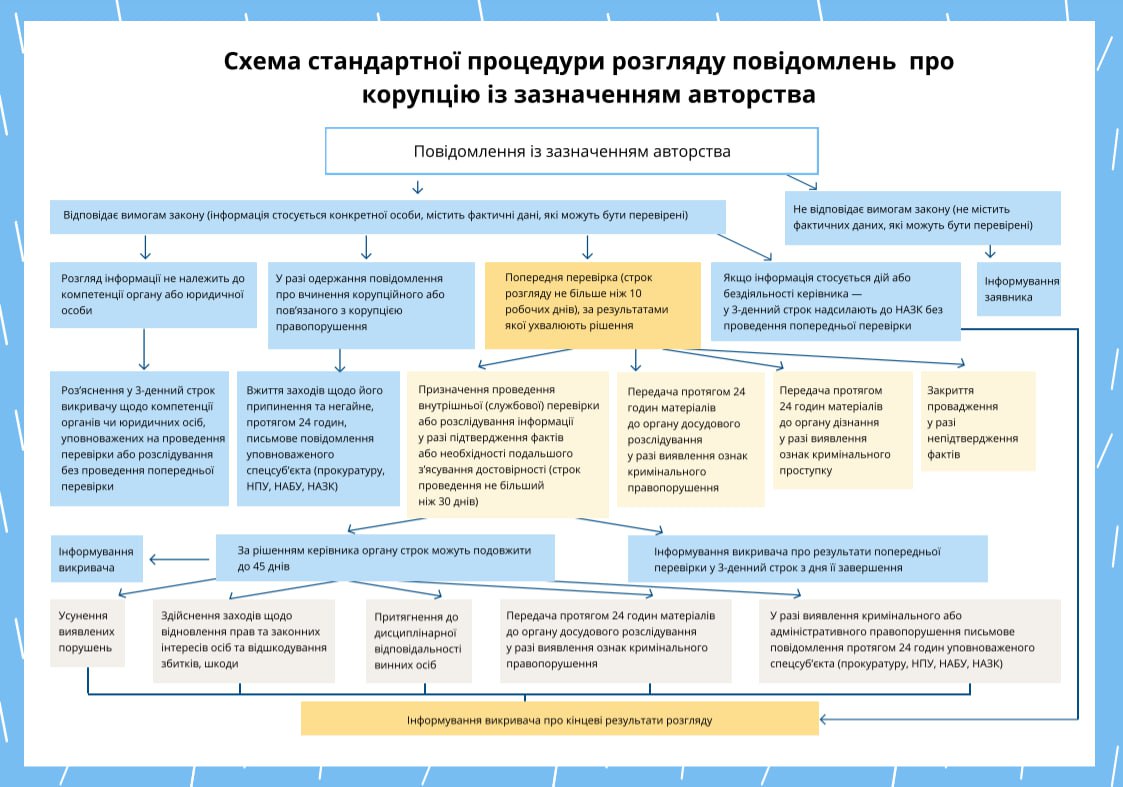
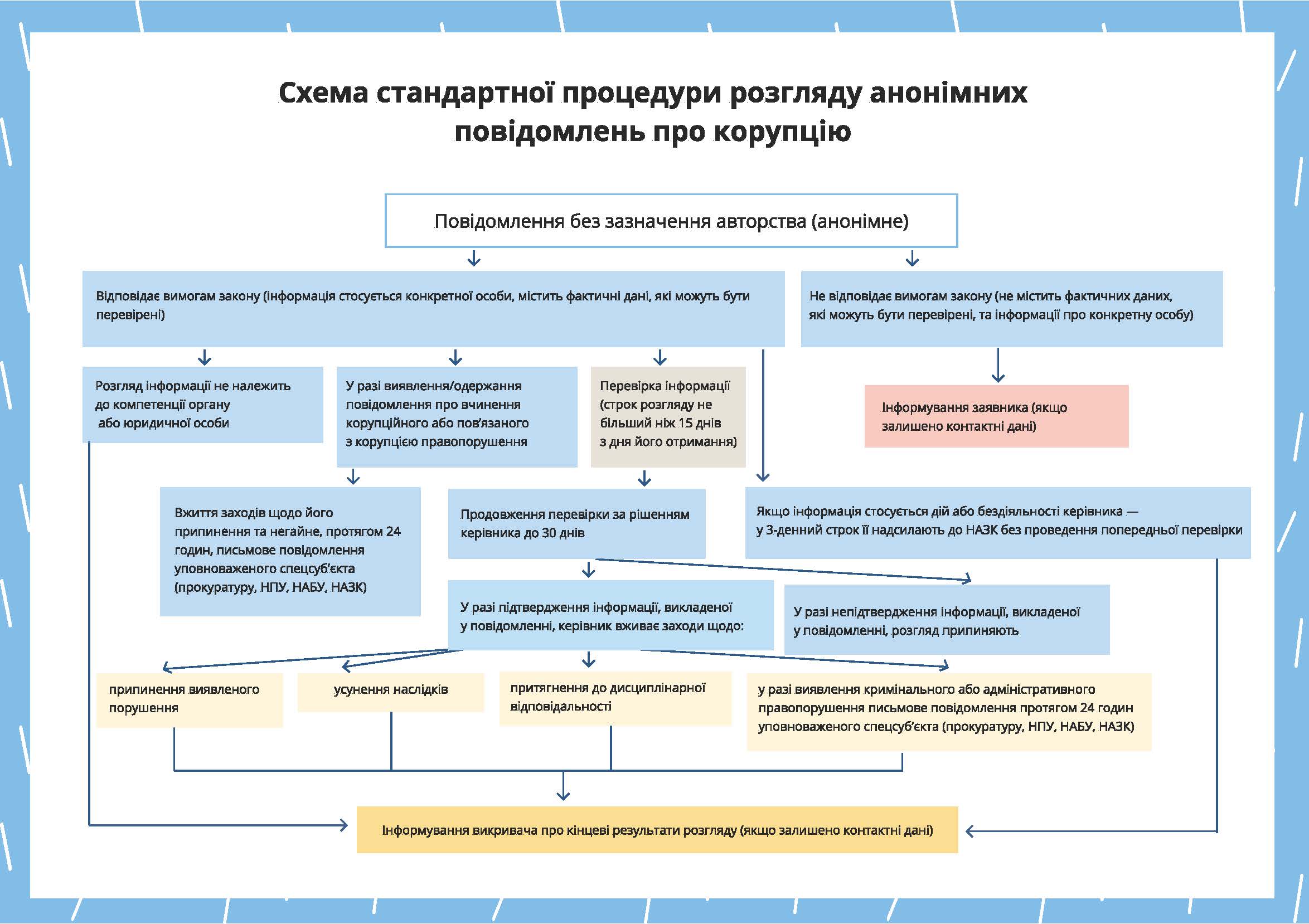
"Procedure for consideration of a report on corruption"
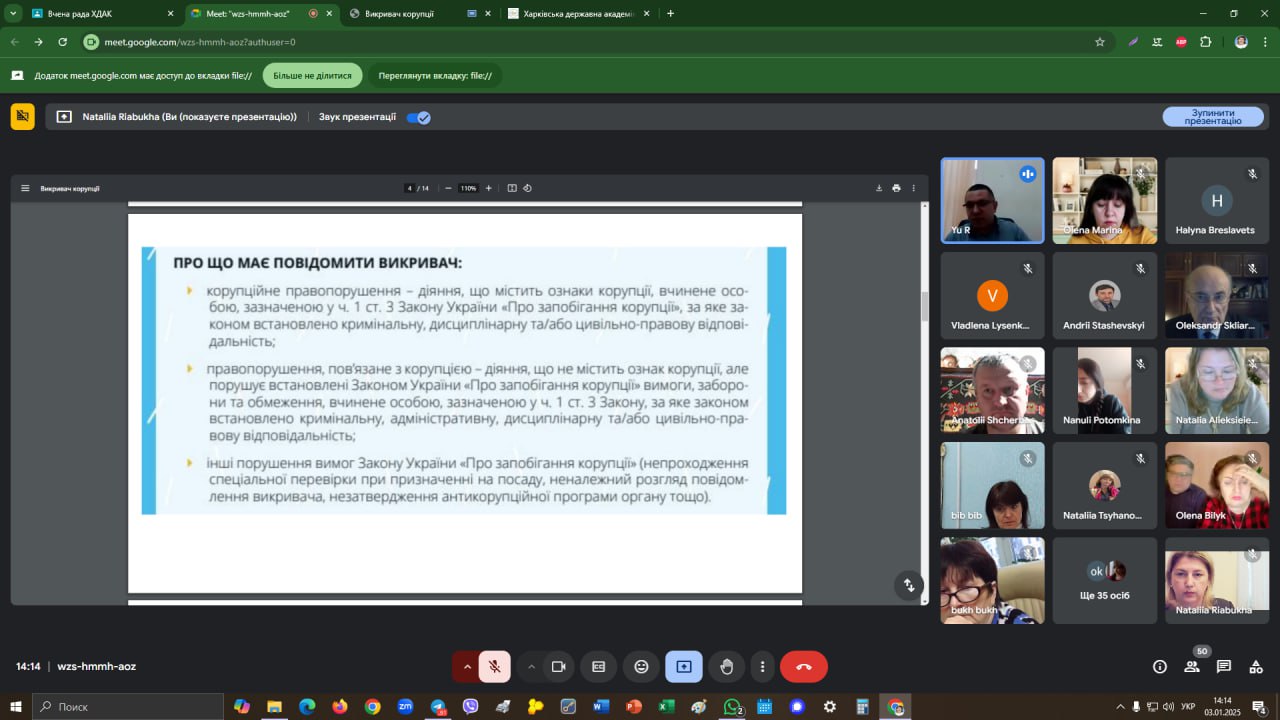
Report on the educational webinar "Corruption whistleblowers. Peculiarities of consideration of corruption reports and conducting their inspections"
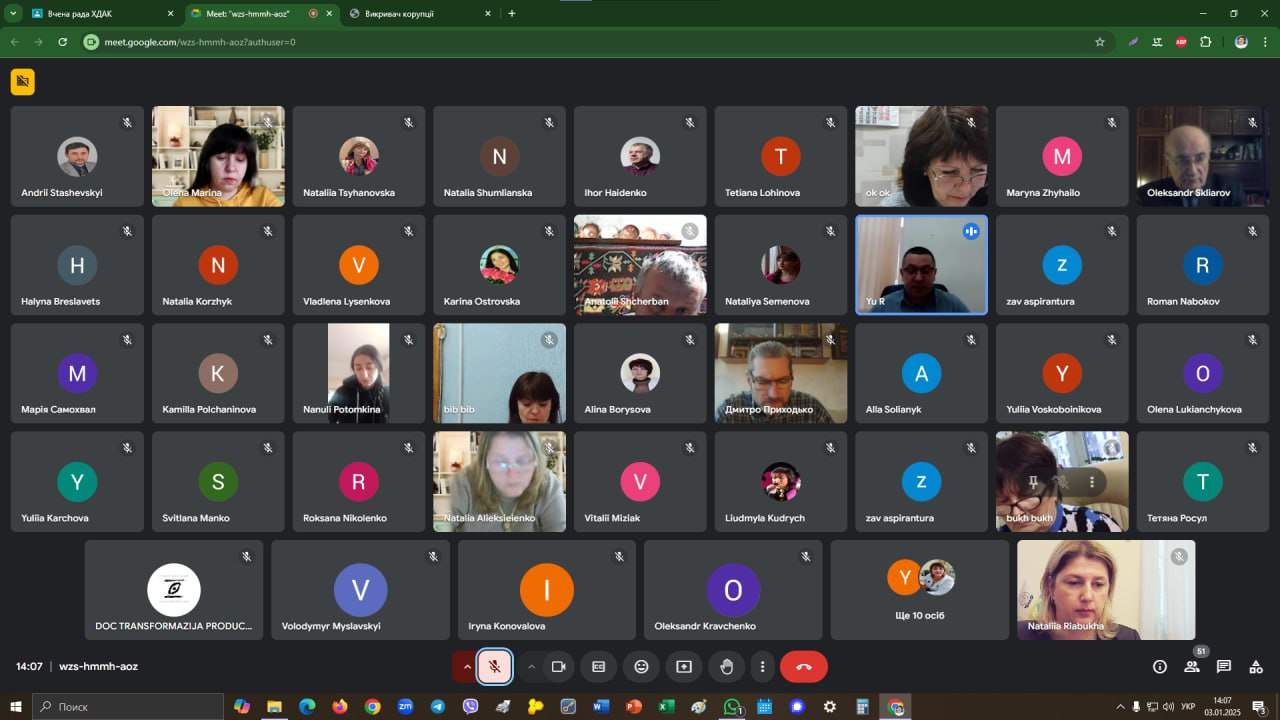
January 3, 2024an educational webinar was held at the Kharkiv State Academy of Culture (KhSAC) on the topic:«Corruption whistleblowers. Peculiarities of consideration of corruption reports and their inspections". The speaker of the event was the leading specialist in anti-corruption activities of the KhSAC Artem KONOVAL. Participating in the webinar was joined by acting of the rector Natalia RYABUHA, vice-rectors Inna STASHEVSKA, Alla SOLIANIK, Olena BILYK, Marina ZHYGAILO, Marina SKRYTSKA, deans of faculties Natalia MARKHAYCHUK, Roman NABOKOV, Natalya KORZHYK, Halyna BRESLAVETS, Iryna MOSTOVA, heads of departments, all heads of structural divisions (educational department, personnel, legal, economic service, etc.), as well as other employees of the academy. In total, 51 people took part in the educational event.
The main issues that were discussed at the training webinar: 1. The role of whistleblowers in preventing corruption. The speaker emphasized the importance of whistleblowers in ensuring the transparency of institutions' activities. The ethical aspects of supporting whistleblowers and their importance for building a virtuous environment were emphasized.
2. Brief description of international experience. Examples from the international practices of the EU, USA, Great Britain and other countries that provide effective legal protection for whistleblowers are given. The principle of work of specialized anti-corruption bodies and internal services was discussed.
3. Functioning of internal communication channels. The existing channels in HDAK are described, which allow anonymous and confidential reporting of facts of corruption. Explains how staff and students can use these channels.
4. Procedure for consideration of whistleblower reports. The stages of notification verification, response mechanisms and interaction with competent authorities are outlined.
Practical aspects of the implementation of anti-corruption measures were actively discussed during the webinar.The participants expressed their opinions on the application of international experience under the conditions of Ukrainian legislation, ensuring confidentiality when considering whistleblower reports, and potential risks for workers who submit reports. The question of the functioning of internal communication channels caused a lively discussion. The participants were interested in how HDAC can further contribute to increasing trust in these channels among students and employees.
Special attention was drawn to questions regarding the algorithm for responding to whistleblower reports: • How to avoid bias in testing? The speaker explained that all checks are carried out in accordance with the approved procedures, observing the principle of objectivity.
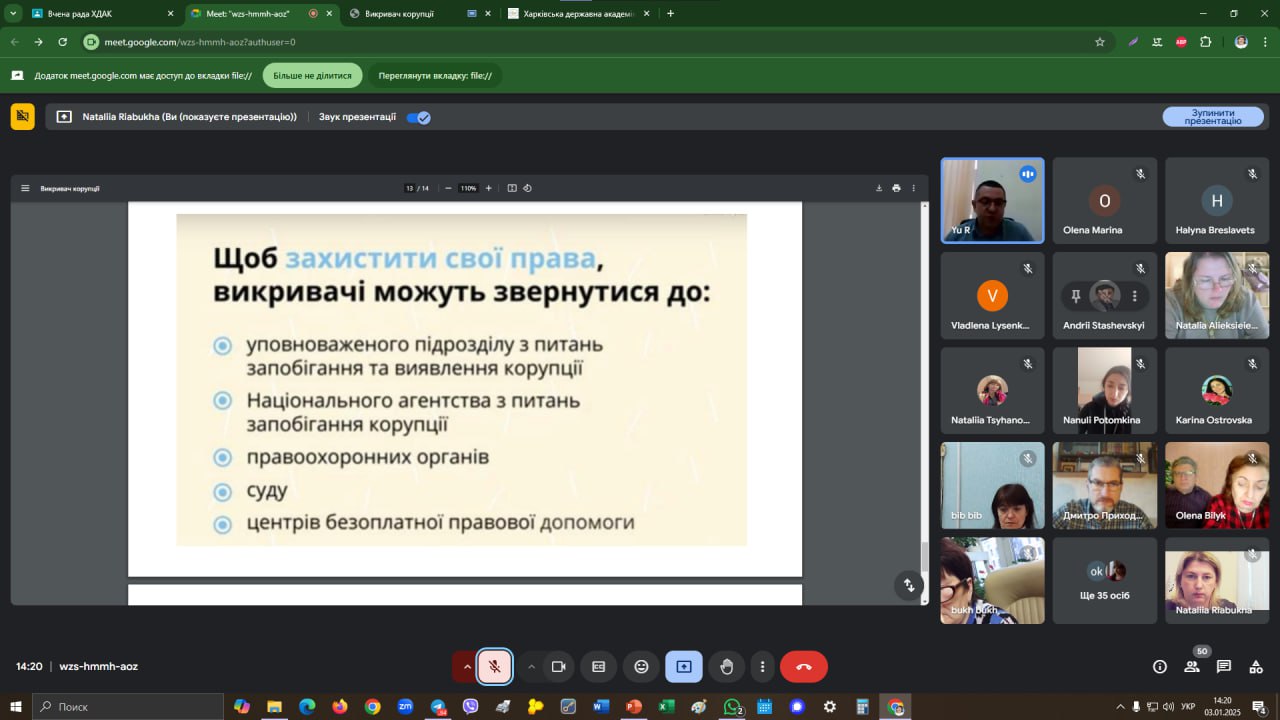
• What safeguards are in place to protect whistleblowers? It was stated that the KhSAC is guided by the current legislation and implements measures to guarantee the protection of persons who report corruption.
The participants also expressed initiatives to expand the topics of future training events, in particular, consideration of practical cases with real situations.
The webinar enabled the participants to gain up-to-date knowledge on the prevention and detection of corruption, as well as deepen their understanding of the role of whistleblowers in creating an ethical environment.
Educational and methodological and informational materials prepared for the webinar were sent to the heads of structural divisions for use in their work. All materials are freely available for perusal on the official website of the KhSAC at the following link: https://ic.ac.kharkov.ua/norm_base/eng_korupciya.html (see above).
The Kharkiv State Academy of Culture continues to implement measures aimed at improving the culture of integrity among employees and students, preventing manifestations of corruption and ensuring openness and transparency of activities.


 HOME
HOME
 FOR ENTRANTS
 FOR APPLICANTS
 STRUCTURE
 SCIENCE
 EDUCATION QUALITY